

I got back from Sonoita a few weeks back. 5-day retreat with Boulder Crest, all former military and law enforcement. One full day we spent mapping our families from grandparents down: who they were, what they carried, what passed to the next generation. I guess it was a genogram of sorts…
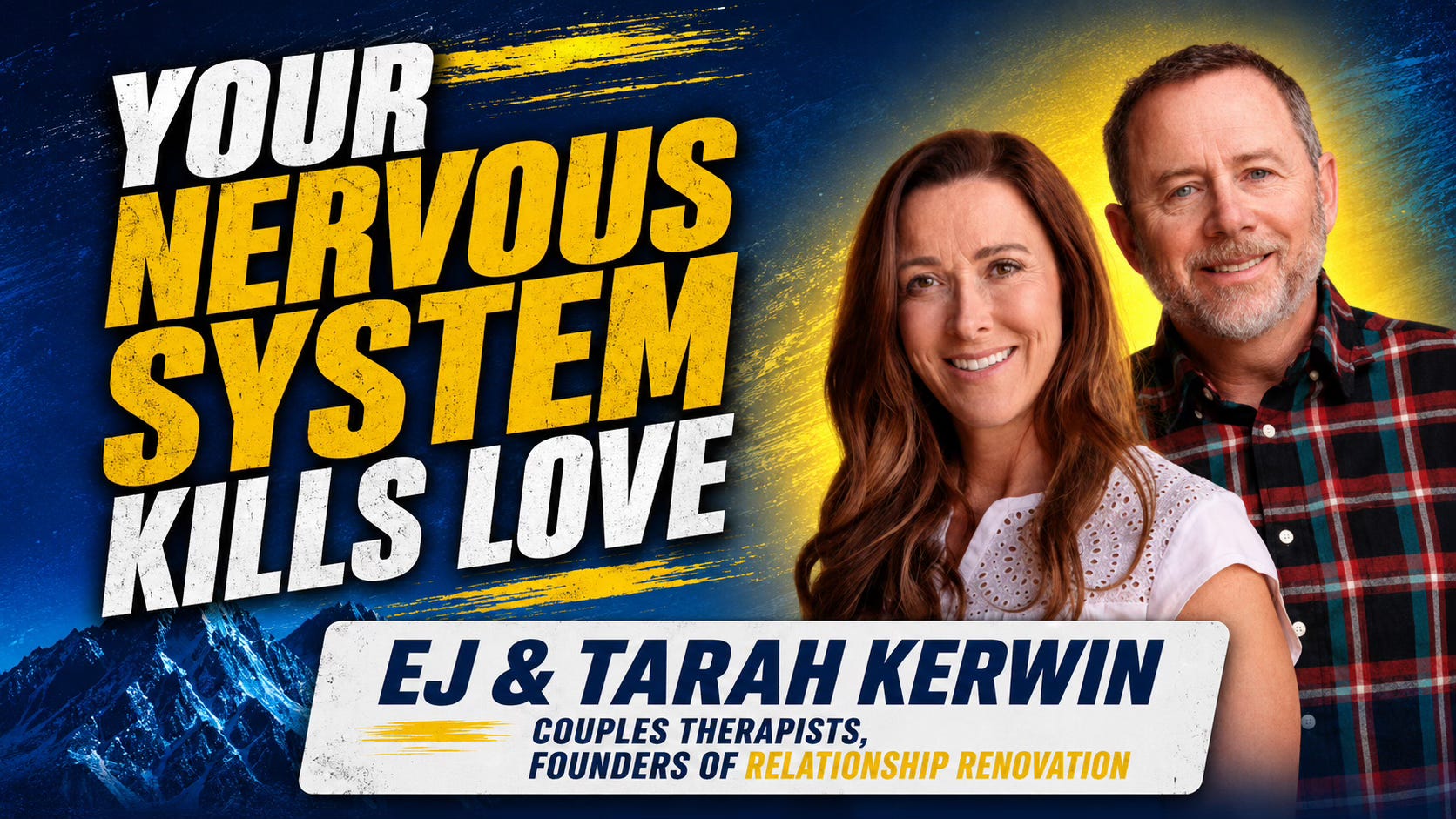
3 days later I was talking to EJ and Tarah Kerwin, who’ve been couples therapists for a combined 30 years and built Relationship Renovation out of what they had to learn the hard way. They described the exact same mapping process as the foundation of all their couples work. Crazy how things work sometimes!
EJ and Tarah got married, got pregnant with twins on their honeymoon, and EJ’s 2 kids from a previous marriage (ages 3 and 5 at the time) came into the picture. Tarah went from 0 children to 4 in under 18 months while the twins had colic. EJ, who was a yoga teacher and a therapist with a serious mindfulness practice, went completely avoidant. Tarah said at one point she’d called him a “Buddhist motherF***” out of sheer frustration. They almost didn’t make it. 2 years later they opened their counseling center. The whole thing grew from what they had to figure out themselves.
The shelf life of a strength
EJ and Tarah’s core argument, and the one that I think applies to basically every high-functioning man we’ve talked to on this show: the traits that carried you through adolescence into professional success are often the exact traits that create the most damage in intimate relationship. Emotional control. Self-sufficiency. Problem-solving. Getting through hard things without breaking. They were functional. They worked, for a long time, in specific environments.
EJ is a clear example. He was the guy who could handle high-pressure situations and stay composed. That made him good at his work. It made him reliable in a crisis. It also meant he couldn’t show up transparent or vulnerable with Tarah, because he’d spent 20 years building an infrastructure around “I’m fine.” And he succeeded so completely at that construction that he didn’t even know it existed. His first wife had told him the same things Tarah was telling him. He married someone completely different. He got the same problems. At some point he had to look at the common denominator.
Tarah’s observation: most of the couples they see have been running traits that served someone, somewhere, at some point. The traits themselves aren’t the problem. The failure to recognize when context has changed is where things break. The skills that got you here require an upgrade for where you’re trying to go. That’s not a comfortable thing to hear if you’ve built an identity around those skills. I’m not saying it doesn’t apply to me, because it does.
Hypo-arousal is armor
This is the one I want every man who thinks he’s “the calm one” in his relationship to sit with. EJ’s observation, and it applies directly to how he used to operate: a lot of men mistake hypo-arousal for staying rational. Something activating happens. They shut down. And then they convince themselves (and try to convince their partner): “I didn’t yell. My voice isn’t raised. I’m fine. I’m the one who’s actually calm here.”
The problem is they’re not regulated. They’re checked out. Hypo-arousal is a nervous system response, not a choice, and it’s the opposite of being present. It’s the body going quiet to protect itself. EJ pointed out that men use it especially around intimacy: rejection comes, they shut down, and instead of saying “I’m feeling hurt and I’m feeling unwanted,” they go into this composed distance that their partner reads as resentment and withdrawal. The shutdown was supposed to be protection. It builds exactly the distance it was trying to avoid.
One of our earlier guests gave us an acronym that came up again in this conversation: FINE. Feelings Inside, Not Expressed. That’s the avoidant flavor of “I’m fine.” The difference between being regulated and being hypo-aroused is whether you could actually be present with your partner’s experience right now. A lot of men who think they’re regulated would answer that question differently if they were being honest about it.
Your partner can be your greatest teacher
This is the reframe EJ described, and it’s the hardest one to actually use. When Tarah triggers something in him, his default used to be to go toward blame or to go away. The shift he’s worked on: holding up a mirror. The discomfort she creates in him is pointing toward something in him that needs developing. The trigger is information, not just a problem to contain or exit.
Tarah said it differently: “EJ is my blind spot. There are so many things I don’t see about myself.” The relationship as a mirror rather than as a source of threat is a completely different orientation. It requires what EJ described as a willingness to sit with the discomfort rather than flee it. His phrasing: “If it hurts, I’m going to sit with it. I’m going to see what it’s teaching me.”
Which is mindfulness applied in the hardest place. Your partner, in your kitchen, after a long day, when something they said just landed wrong and every part of your nervous system is pulling you toward the exit. The window between what they said and how you respond is narrow. EJ and Tarah’s work is about building that window out. That, I think, is what the best relationship work is. And it’s also exactly what we spent the last hour on in Wednesday’s webinar.
Full episode: Audio here. Video is on Spotify now and will be on the Valor Media Network YouTube channel later today. Search Men Talking Mindfulness on any podcast platform. EJ and Tarah’s work is at relationshiprenovation.com. They also run a global men’s group called Men Who Do the Work.
Founders’ Days: A2A at 40% off through 1pm ET Friday.
The Awareness to Action course is live. From now through 1pm ET tomorrow, we’re running Founders’ Days: 40% off the annual membership and a significant discount on the lifetime fee. This is the best price we’ll EVER offer.
12 modules. Full year of access. Videos, guided meditations, live calls with Will and me, Circle community. The whole framework for attention, awareness, and action, built into a practice.
focusnowtraining.com/a2a-course or text MTM to 33777.
A note on what’s below.
The 3 resources at the end of this newsletter are the kind of thing we put in the paid edition every week: something you can actually use today, tied directly to what we talked about. This week they’re open to everyone.
If you want to keep getting this every Thursday, becoming a paid subscriber is how that works. We put real work into these and we appreciate everyone who supports it.
3 resources from this episode
Normally in the paid edition. Open this week.
Resource 1: The internal script audit
EJ described catching the cognitions that auto-launch before a conflict. His is “here we go again.” The minute that phrase surfaces, his nervous system has already decided how the next hour goes. He can catch it, he can pivot. But only if he knows what to listen for.
Write down your top 3. The internal phrases that surface right before things go sideways with your partner. “Here we go.” “Why does she always...” “I can’t say anything.” Whatever yours are. Writing them down gives you a fighting chance of catching them in the moment. You can’t redirect a script you haven’t read.
Resource 2: EJ’s compassion mantra
When Tarah was escalating and EJ’s old pattern would have been to judge and withdraw, he started using a specific phrase: “She’s suffering right now.” Not as a platitude. As a cognitive interrupt. He was replacing “what the hell is wrong with her” with a statement that was actually more accurate about what was happening.
Keep a phrase like this ready. When your partner’s behavior triggers your nervous system and you’re about to go into shutdown or defense, the phrase is a redirect before your default pattern takes over. EJ’s exact words work fine. Or find your own version that’s true.
Resource 3: The Triple H question
Jon brought this up during the conversation: before responding to your partner in a hard moment, ask which of 3 things they actually need. Heard. Hugged. Or Helped. Those 3 cover most of what’s actually being asked for. “Helped” is the fix-it response, which is usually not what’s needed but gets deployed most often. “Heard” is usually what’s being asked for, and it requires almost nothing except presence and your mouth staying closed long enough for them to finish.
You can ask it out loud. “Do you need me to listen, do you need to be held, or do you want me to help you figure it out?” Most partners will tell you. And most men are surprised that the answer is rarely “help me fix it.”
Men Talking Mindfulness is hosted by Jon Macaskill and Will Schneider.
New episodes every week. Search Men Talking Mindfulness on any podcast platform.
EJ and Tarah Kerwin: relationshiprenovation.com
Focus Now Training: focusnowtraining.com/a2a-course