

Why the difference between “I am” and “I’m being” matters more than you think!
I was walking my dog down the road a few weeks ago. A woman from my neighborhood was walking behind me, same direction. She crossed to the other side of the street and we started to converge at the end of the block. She had headphones on, phone to her ear. And as she passed me, I heard her say to whoever was on the line: I’m about to pass the husband of the couple I like least on the planet right now.
The 7-year-old in me (the one who moved from South Africa to the States, the one who got picked on by kids who didn’t know what to do with the accent) yelled at her. “I can hear you, you know.”
She didn’t respond. Noise-canceling headphones, probably. So I kept walking, furious. White-knuckling the ball I was about to throw for my dog. Blood boiling. I did some breathing. A few minutes later I had this thought: I don’t know that woman. I don’t know what she’s carrying today. And then: maybe I’ve wronged her in some way I’m not even aware of. I have blind spots. Maybe she’s seen one of mine and it was ugly.
I have a shirt with a Robin Williams quote. “Be kind. You never know what battle someone else is fighting.” I said that to myself over and over on that walk. It helped. Not all the way. But it helped.
What’s happening before the words come out
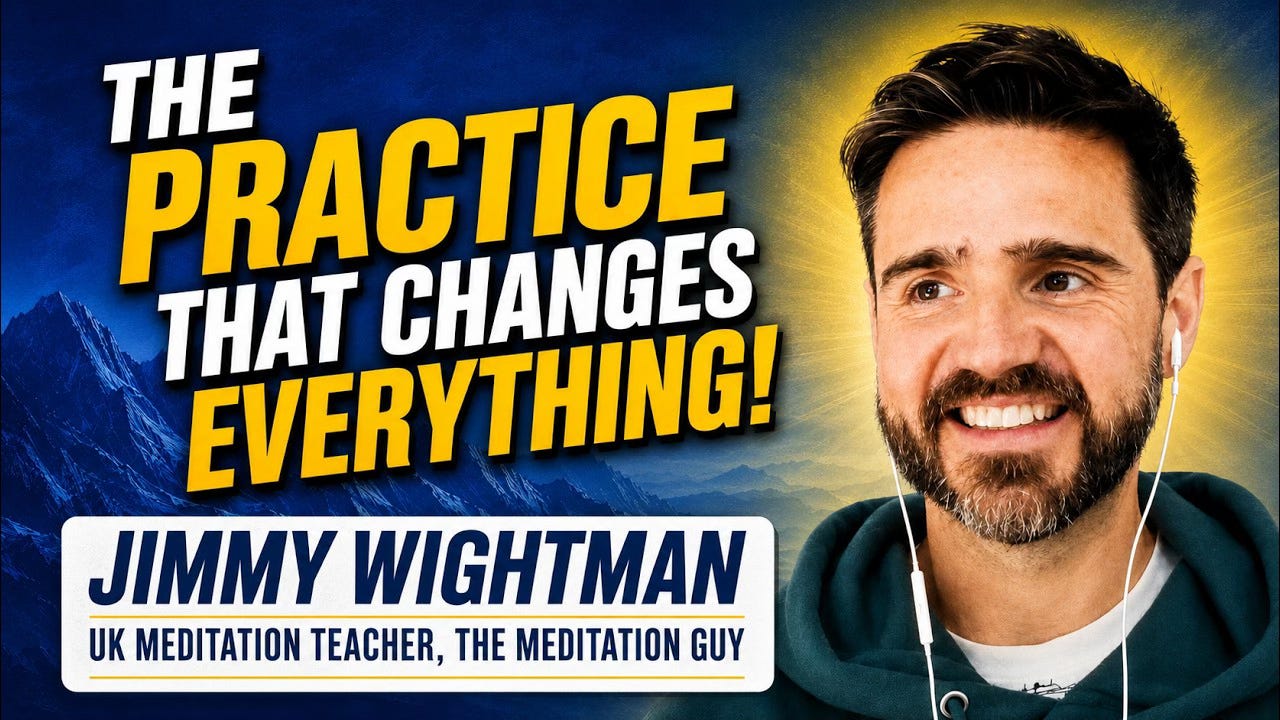
Jimmy Wightman recently came on our podcast and started with a story. Bad day with his then-girlfriend: forgotten tickets, couldn’t park, raining. She got frustrated and started pushing his buttons. And something happened in him that had never happened before: as she was saying these things, he saw an image flash into his mind of a kid who used to bully him at school. He made the connection in real time. The way she’s talking to me is triggering an emotion from back then.
He heard his inner monologue fire up with all the defensive responses. He didn’t say any of them out loud. He felt the urge to leave. He didn’t leave. He stayed regulated. And because he stayed regulated, she co-regulated. The whole thing moved on. He spent the rest of that evening going back to that moment: wow, what’s going to happen if I keep practicing?
That’s the promise. The work happens in the sitting. The result shows up in your relationships.
Dr. Stephen Porges spent decades mapping the mechanism. His polyvagal research shows that the nervous system is social by design: when one person stays grounded, the nervous systems in the room have something to anchor to. Your calm transfers. Your regulation is biology, not performance.
What actually wrecks relationships
Men tend to wreck their closest relationships quietly, not loudly. The big obvious blowups are visible. Everyone can see them, process them, move on. The actual damage tends to be quieter: the snapping, the half-listening, the checking out at the dinner table, the stonewalling. Chronic, low-grade reactivity that builds over months and years without either person being able to point at a specific moment. Viktor Frankl wrote about the gap between stimulus and response. That gap is where freedom lives. And meditation is one of the most direct ways to widen it.
A 2015 National Institutes of Health review by Brian Holesell and colleagues found that a consistent meditation practice builds more accurate self-awareness, less self-criticism, and a shift from seeing the self as a fixed, rigid thing to something more fluid and honest. Fewer reactions that are really about something that happened 20 years ago, dressed up as something that happened this afternoon.
I’ve been meditating about 11 years. My kids have noticed, which is the thing I care about most. I’ve got a 9-year-old daughter, a 7-year-old son, and an almost 5-year-old daughter. They inadvertently push buttons, same as all kids. And I still lose it sometimes. But my son made me a little rubber band bracelet. I snap it sometimes when I feel myself starting to go. It’s just a reminder: I love these people. Show them that.
“I am” vs. “I’m being”
This came up in 2 different places in the episode, so I want to pull it out.
Jimmy described something that years of practice produced in him: strong emotions still arise, but they no longer feel like they have an owner in the same way they used to. Before practice, it was “I am this anger.” After years of consistent sitting, anger arises. It’s distinct from him. That’s a different relationship entirely, and it’s hard to describe until you’ve felt it.
The practical frame I put on it: mindfulness helps you separate identity from behavior. “I am an asshole” is shame. You’re guilty for being something. “I’m being an asshole right now” is guilt. You’re responsible for what you did. Those are different categories. Shame is hard to work with because it feels like identity. Guilt is workable because the behavior is visible and specific.
Men often live in the shame column without calling it that. The inner voice that says “I always do this,” “I’m terrible at this,” “what is wrong with me” -- those are shame statements. They sound like self-awareness. They function more like anchors, keeping the behavior locked in place because the behavior and the person feel like the same thing.
Jimmy came to his version of this through people pleasing. He had it strongly: sacrificing his own needs to accommodate others, then resenting them for it. Completely invisible to him while it was running. When he started to set small limits, his nervous system responded like he was in genuine danger. Disagreeing with a client. Saying he wasn’t available to reschedule. His body read it as a high-risk situation. He stayed in the discomfort. Slowly, the nervous system learned something new.
“Everything’s welcome, everything’s allowed”
Jimmy said he tells himself this about 20 times a day. Every time something comes up, some slight feeling of aversion, that’s the mantra. He softens around it. He doesn’t fight it.
He described 3 components of what a meditation practice builds. Concentration (the ability to pay attention to what you want to pay attention to). Sensory clarity (noticing the specific details of your experience: mental images, inner voice, body emotion). And equanimity. The 3rd one is the one most people don’t know about.
Equanimity is the option between reacting and suppressing. You feel something fully. You turn toward it. You let it be there. And you don’t act it out. Jimmy called it the magical third option. From that place, you can actually choose what to say next.
His girlfriend story was the demonstration. He felt the emotion coming. He felt the urge to run. He stayed and he felt it. The thing that needed space got space. Nobody got hurt. And something important: she co-regulated in response to him staying grounded. He didn’t fix it. He held it.
The thing is, you don’t access this in the moment if you haven’t built it in the calm. The feet on the floor, the breath, the grounding sensations: those are trained in the sitting. When you’re triggered, what comes online is what you’ve practiced, not what you intended to do. That’s the rub. And that’s why the sitting matters even on days when nothing feels hard.
What to do about it
Notice the moment before. There’s a moment between when something happens and when you react to it. Your job is to start noticing that moment. The more you practice noticing it, the more space you have to work with.
Swap “I am” for “I’m being.” Next time you catch yourself identifying with a behavior (”I’m such an idiot,” “I’m terrible at this”), shift the language. “I’m being” puts the action in front of you. You can look at it, take responsibility for it, change it.
Try the see-hear-feel practice. In any moment, especially a triggered one, name what you’re experiencing as seeing, hearing, or feeling. Inside or outside. That simple act of labeling takes you out of the storyline and into the actual present moment. You can do it anywhere. At the dinner table. In a difficult conversation. On the subway.
Build the sitting before you need it. A consistent sitting practice, even 10 minutes a day, builds the reference points your nervous system can return to under stress. You’re reminding it of a state it already knows how to find.
Use Jimmy’s interest/opportunity/necessity framework to find your practice. What are you actually drawn to? What time do you realistically have? And what do you actually need right now? The right practice is the one you’ll do tomorrow, not the most impressive one you’ve tried once.
This week on Men Talking Mindfulness
Will and I sat down with Jimmy Whiteman, UK-based meditation teacher, known online as the meditation guy. He came to this work through insomnia and a nightlife career as a DJ in London, which is not the obvious path. He’s one of the clearest people I’ve heard explain what meditation is doing inside you, and why the stuff that happens in the sitting eventually shows up in your most important relationships.
Watch on YouTube | Listen here
One more thing before the pay wall
Will and I launched Awareness to Action a few weeks ago. It went really well. Thank you to everyone who joined. We built community into the course on purpose, because connection is part of what makes the inner work actually stick. We’re looking to grow that into in-person retreats, the kind of thing this episode keeps pointing toward. Text MT
M to 33777 or go to FocusNowTraining.com/A2A-course to find out more.
Until next time,
Jon Macaskill and Will Schneider Focus Now Training and Men Talking Mindfulness
If this landed for you, share it with someone who needs it. And if you want this in your inbox every Thursday, subscribe. We’ll be here.
