

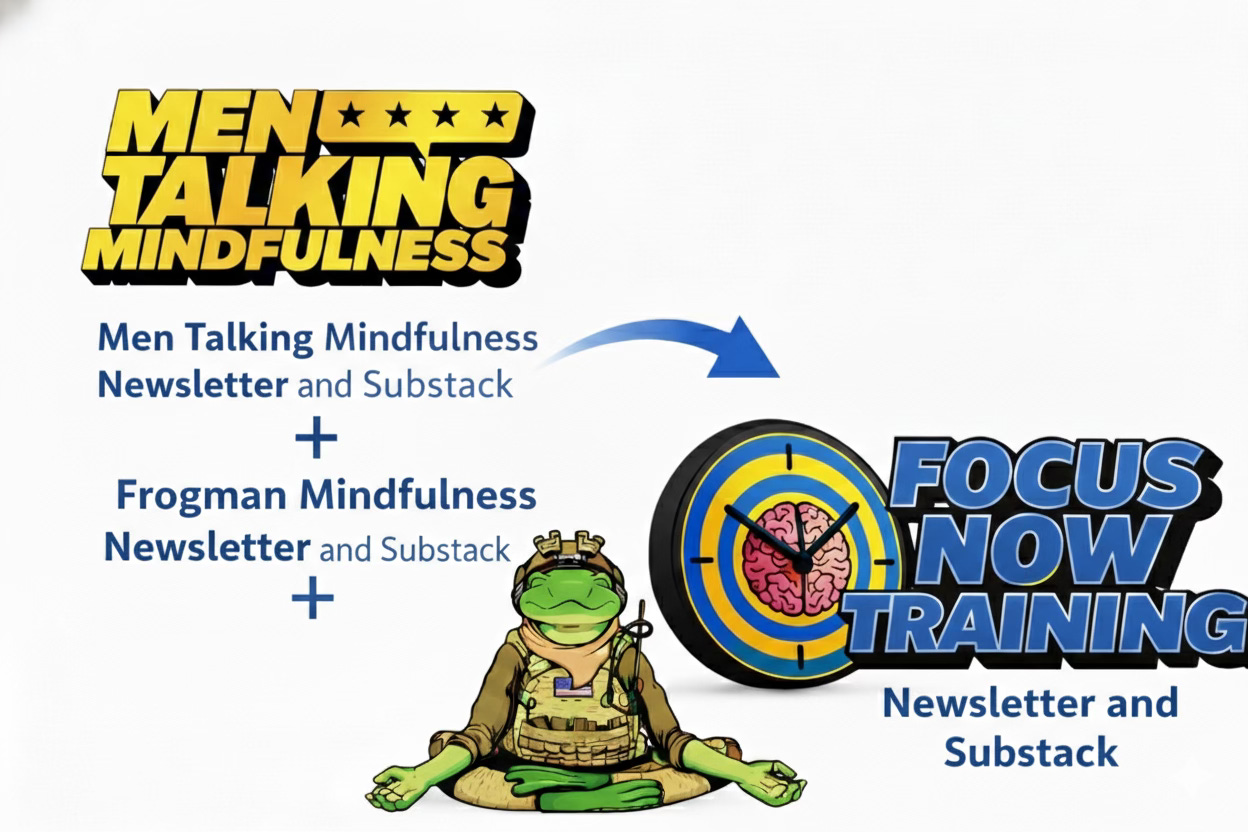
Hey everyone! It’s Jon Macaskill and Will Schneider from Frogman Mindfulness and the Men Talking Mindfulness podcast. Most of you know this Newsletter/Substack as usually written from the Frogman Mindfulness Newsletter/Substack or the Men Talking Mindfulness Newsletter/Substack. Well, we are now officially combining them into the:
Focus Now Training Newsletter / Substack
This change reflects growth not an ending.
Focus Now Training is the next chapter of the work we’ve been doing for years: helping people build focus, resilience, emotional regulation, and clarity under pressure … not just in theory, but in real life.
The Men Talking Mindfulness podcast is absolutely continuing.
In fact, it remains a core expression of our voice and values.
What’s changing is this:
The podcast will soon be only one of several different ways we serve.
As Focus Now Training expands, this newsletter will increasingly bring you:
Practical mental, physical, and emotional skills you can use immediately
Deeper reflections on leadership, grief, resilience, and meaning
Tools that bridge mindfulness with performance, relationships, and everyday life
Think of this newsletter as the throughline … where insight, training, and lived experience come together.
We’re grateful you’re here for this evolution.
Now, let’s get into this week’s reflection.
There’s a dangerous myth many of us were raised on:
That strength means silence.
That pain should be handled alone.
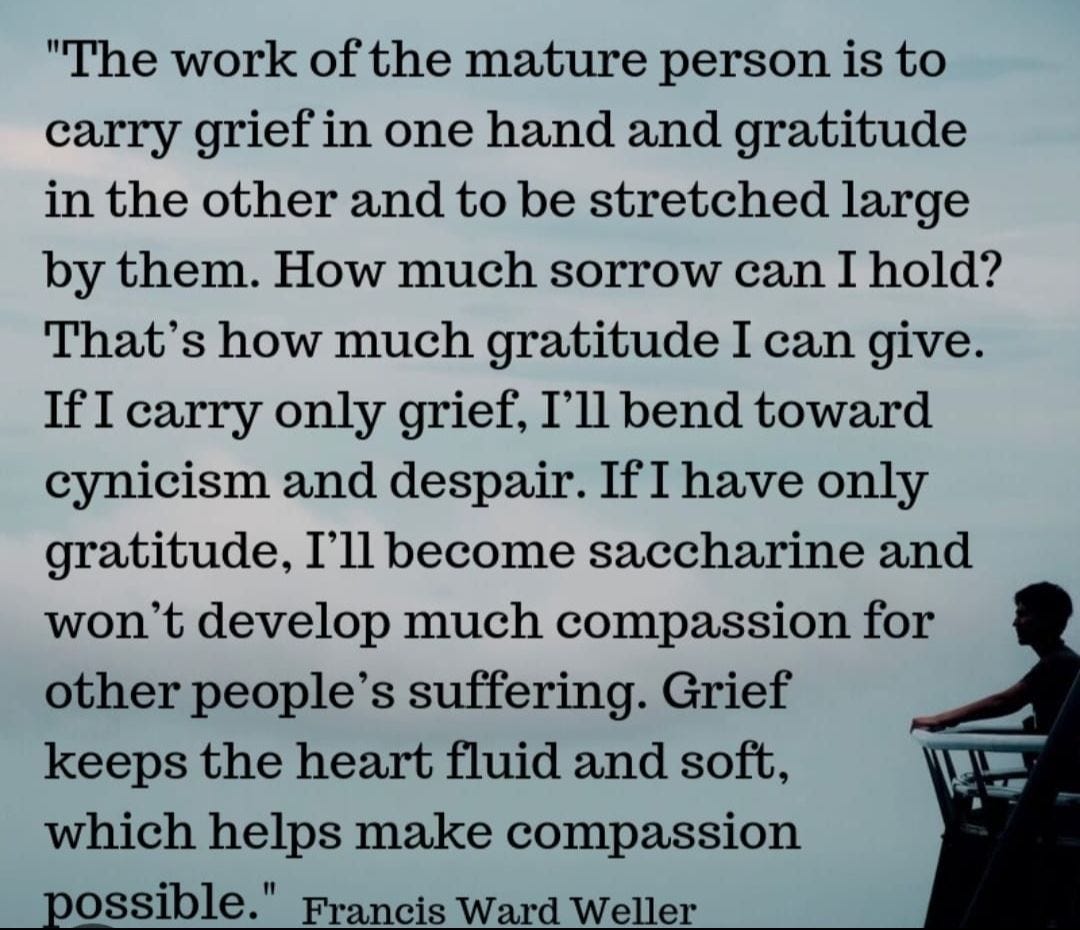
That gratitude and grief cannot coexist.
This week, that myth gets dismantled.
Will and I recently sat down with an 18 year old kid and… well, I’ll just say this…
At 18, he articulated something many adults never fully grasp:
You can hold grief without being consumed by it.
You can feel gratitude without denying pain.
And no matter what you’re facing, you always have a choice.
The Quiet Power of Choice
Choice doesn’t mean control.
It doesn’t mean bypassing pain or pretending things didn’t hurt.
It means deciding how you carry what happened.
Do you:
Turn inward and numb out?
Project pain onto others?
Or pause long enough to respond with intention?
Mindfulness lives right there … right there in that pause.
Gratitude Isn’t Toxic Positivity
Real gratitude isn’t about silver linings or forced optimism.
It’s about honoring what mattered even when it’s gone.
Grief is proof of love.
Gratitude is proof of meaning.
You don’t have to pick one.
Assume Incompetence Before Malice
One of the simplest mindset shifts we’ve heard lately:
“Don’t seek malice when you can seek incompetence.”
Someone cuts you off.
Someone snaps at you.
Someone disappoints you.
Before deciding they meant harm, ask:
Could they be overwhelmed?
Distracted?
Struggling silently?
This single reframing has the power to:
De-escalate conflict
Preserve relationships
Protect your nervous system
Why This Matters
We’re watching a generational shift.
Younger people are:
More emotionally aware
More open to conversations about mental health
More willing to question outdated definitions of masculinity
And yet, they’re also navigating:
Algorithm-driven comparison
Dopamine burnout
Isolation masked as “connection”
The skill they need most isn’t more motivation.
It’s discernment.
What deserves my attention?
What’s pulling me away from myself?
What choice am I making right now — consciously or unconsciously?
🎧 Want to Go Deeper? Check this out and then look at the Thursday Three Things list below that.
This reflection was inspired by a powerful conversation on the Men Talking Mindfulness show with Carter Helbig, a “kid” whose graduation speech went viral on TikTok. Here’s the link to that (on YouTube
) and the links to watch or listen to this episode are here.
🎙 Audio: https://pod.fo/e/3861ca
📺 Video:
Three Resources for Living This Work
1️⃣ The Choice Point Practice (Advanced Nervous System Skill)
Most people think choice is cognitive.
It’s not.
Choice lives in the body.
When something triggers you:
Your breath shortens
Your jaw tightens
Your shoulders rise
Before you “decide” anything, your nervous system has already voted.
Practice:
Notice the first physical signal of reactivity
Extend the exhale (twice as long as the inhale)
Name the sensation without a story
Ask: What response would future-me respect?
This rewires impulse into agency.
2️⃣ Grief + Gratitude Mapping (Integrative Reflection Tool)
Instead of journaling about pain, map it.
Draw two columns:
What Hurt
What It Meant
Example:
Loss of relationship → Capacity to love deeply
Betrayal → Clarified values
This integrates grief so it doesn’t get minimized.
Integration is how pain becomes wisdom instead of just a scar.
3️⃣ Algorithm Boundaries for Mental Health (Real-World Protocol)
Social platforms aren’t neutral.
They’re emotion-amplifiers.
Three non-negotiable boundaries we recommend:
❌ No scrolling while emotionally activated
⏱ Time-boxed use (decide before opening the app)
🧠 Replace consumption with creation or connection
If content worsens your inner dialogue, it’s not “relatable,” it’s corrosive (and it’ll only end up feeding your personally built echo chamber.)
You don’t need more input.
You need more presence.
If this resonated, share it with someone who’s quietly carrying more than they let on.
And if you personally are walking through grief, confusion, or transition right now, our hearts are with you.
With Utmost Respect and Gratitude,
Jon Macaskill and Will Schneider
from Focus Now Training and the Men Talking Mindfulness Podcast