

There’s a quiet crisis happening in high-performing teams.
It’s not a lack of intelligence.
It’s not a lack of talent.
It’s not even a lack of motivation.
It’s rumination.
Endless looping. Overthinking. Comparing. Stressing. Reacting.
And it’s crushing creativity, clarity, and connection.
At Focus Now Training, we help teams replace rumination with something far more powerful:
Curiosity.
Not the soft, fluffy kind.
The courageous, growth-driving, performance-enhancing kind.
What Is Focus Now Training?
Focus Now Training was born out of years of work through Frogman Mindfulness and Men Talking Mindfulness and it has evolved into something bigger.
We train leaders and teams to:
Improve focus under pressure
Build resilient nervous systems
Communicate with clarity instead of reactivity
Develop emotional agility
Strengthen psychological safety
Make better decisions in high-stakes environments
Our background blends:
Proven leadership principles
Mindfulness-based performance science
Neuroscience
Biology
Team dynamics
Real-world executive leadership experience
And we make it practical. Tactical. Immediately usable.
The Real Problem: Rumination Is Running the Show
In our latest episode of Men Talking Mindfulness, Will goes solo and gets into something that’s quietly eroding modern performance: rumination
Rumination is:
The mental loop that keeps replaying mistakes
The “Why am I like this?” spiral
The stress that never shuts off
The comparison trap fueled by social media
The overthinking that kills decisive action
From a neuroscience perspective, rumination activates stress circuitry in the brain increasing cortisol, triggering emotional reactivity, and narrowing cognitive flexibility.
In teams, rumination looks like:
Defensive communication
Passive-aggressive behavior
Avoidance of hard conversations
Procrastination
Blame-shifting
Burnout
Left unchecked, it becomes cultural.
The Antidote: Curiosity
Curiosity is performance intelligence.
As Dr. Judson Brewer has said, if you could keep only one tool for transformation, it would be curiosity.
Curiosity shifts you from:
“Why is this happening to me?”
to“What can I learn here?”
From:
“This is a threat.”
to“There’s data here.”
Curiosity engages what neuroscience describes as the PACE cycle:
Prediction Error – Something doesn’t match your expectations.
Appraisal – Is this worth engaging?
Curiosity Activation – Interest replaces threat.
Exploration – Learning and growth begin.
Curiosity expands perception.
Rumination narrows it.
Curiosity regulates the nervous system.
Rumination dysregulates it.
Curiosity builds better leaders.
Rumination builds fragile egos.
Why This Matters for Teams
High-performing teams are not built on certainty.
They are built on disciplined curiosity.
Curious teams:
Ask better questions
Solve problems faster
Recover from mistakes quicker
Communicate more openly
Innovate more consistently
Adapt under stress
And perhaps most importantly…
Curious leaders create psychological safety.
When leaders model curiosity instead of defensiveness, teams feel safe to speak up.
And when teams feel safe to speak up, performance skyrockets.
What We Do With Organizations (Don’t worry, this whole thing isn’t a sales pitch… but yeah, some of it is! 😂 There is more valuable content below all this!)
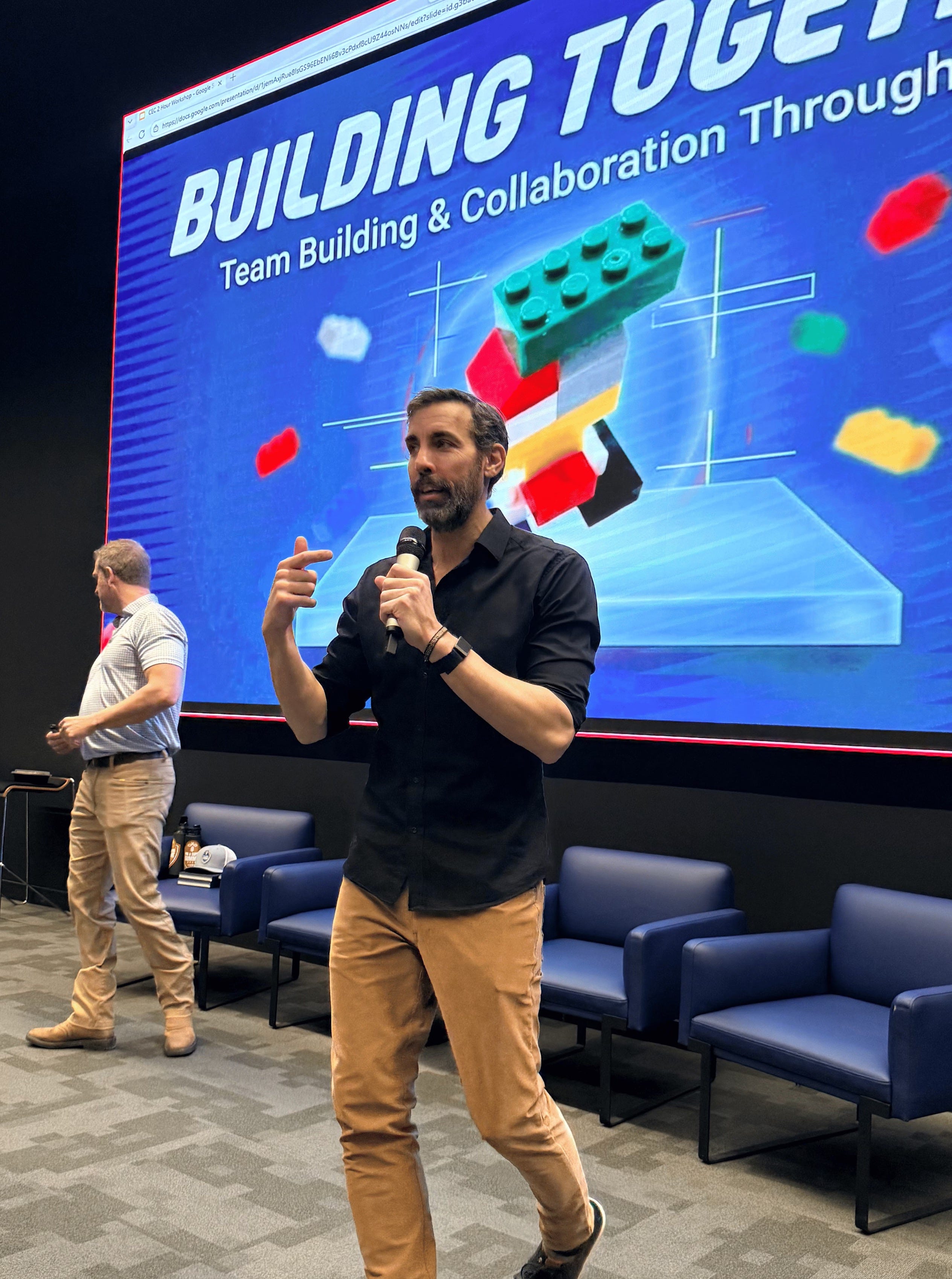
At Focus Now Training, we come into organizations and deliver:
🔹 Leadership Intensives
Half-day or full-day experiential training sessions focused on attention control, stress resilience, and communication clarity.
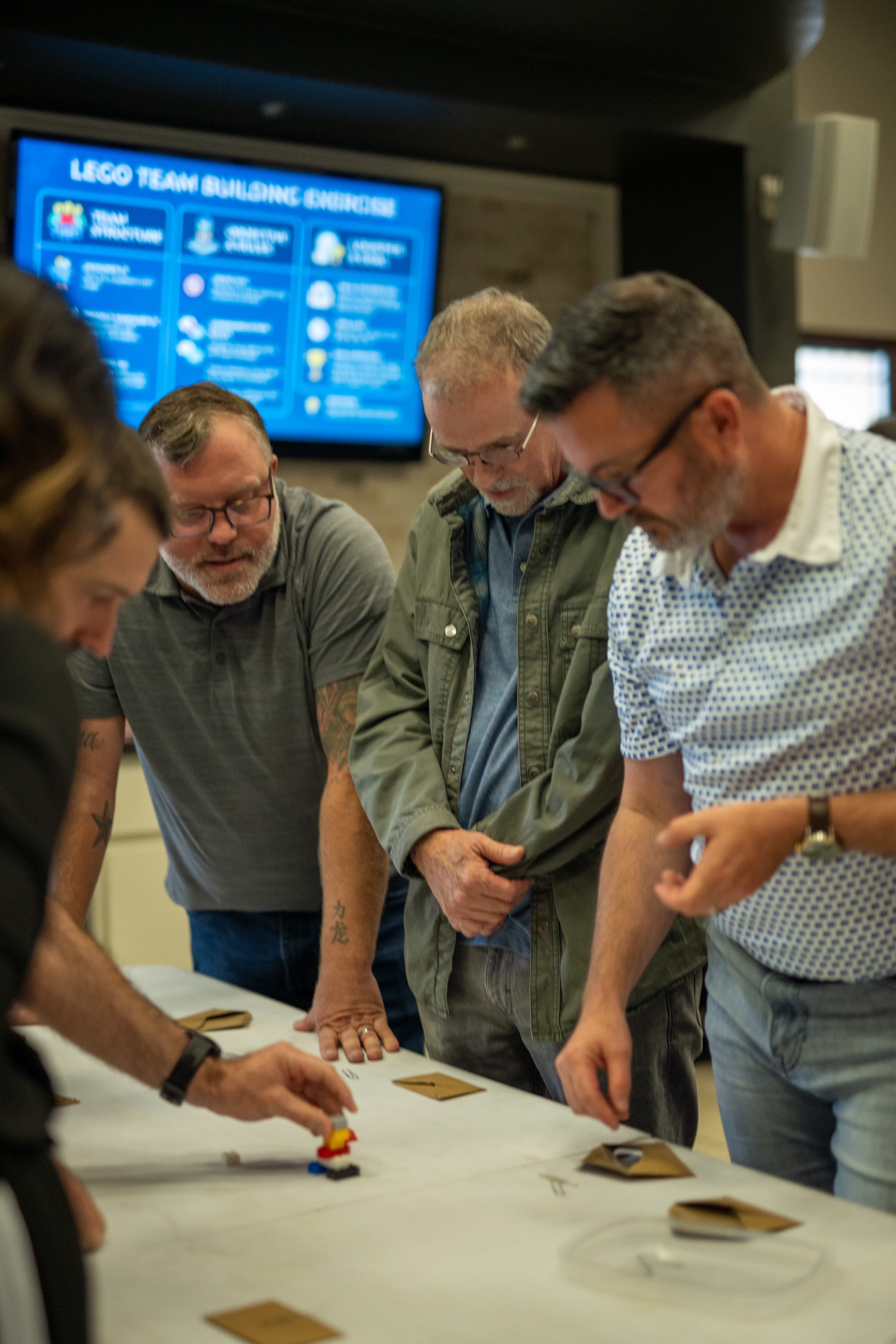
🔹 Team Resilience Workshops
Interactive sessions where teams learn how their nervous systems operate under stress — and how to regulate collectively.
🔹 Tactical Mindfulness for High Performers
Practical frameworks teams can use immediately in meetings, negotiations, conflict, and decision-making.
🔹 Ongoing Coaching & Culture Development
We help leaders embed these skills into daily operations — not just as a one-off training event.
The Cost of Doing Nothing
Modern teams are drowning in distraction.
Technology exploits the same neurological systems as slot machines … variable reward cycles that keep attention fragmented (Check out Michael Easter’s book, Scarcity Brain - lots of stuff about this in there - it’s wild!)
That constant fragmentation fuels rumination.
Rumination fuels stress.
Stress fuels poor decisions.
Poor decisions cost money.
If your team:
Struggles with focus
Avoids difficult conversations
Reacts instead of responds
Feels burned out
Has smart people who underperform
It’s not a talent issue.
It’s a nervous system and attention issue.
And it’s trainable.
Let’s Build Curious, Resilient Teams
If you’re interested in bringing Focus Now Training into your organization:
Leadership offsite
Executive development
Team culture reset
Conference keynote
Custom training engagement
Reach out to us directly: info@focusnowtraining.com
We would love to design something specific to your team’s environment and pressure profile.
You can also listen to this week’s full conversation on curiosity and rumination here:
🎥 Video:
🎧 Audio: https://pod.fo/e/38ba56
Ok… here’s more value for ya… Your Three Things to Increase Curiosity and Decrease Rumination.
1. The 3-Level Curiosity Ladder for Leaders
Most leaders believe they are curious.
Few are strategically curious.
Here’s the model we teach inside executive sessions:
Level 1: Tactical Curiosity
What’s happening?
What are the facts?
What data am I missing?
This reduces emotional reactivity immediately.
Level 2: Relational Curiosity
What might this person be experiencing?
What pressure are they under?
What assumption am I making?
This deactivates defensiveness and builds trust.
Level 3: Transformational Curiosity
What is this situation teaching me?
Where is my ego involved?
What growth edge is being exposed?
This is where leadership maturity develops.
Leaders who regularly operate at Level 3 create extraordinary cultures.
2. The 90-Second Rumination Interrupt Protocol
When you notice looping:
Step 1: Name It
“I am ruminating.”
Naming reduces amygdala activation immediately.
Step 2: Physiological Reset (30 seconds)
Inhale 4 seconds
Exhale 6 seconds
Repeat 5 times
Longer exhales stimulate vagal tone and reduce stress chemistry.
Step 3: Replace With One Curious Question
“What assumption am I making that may not be true?”
This shifts the brain from threat to exploration mode.
Practiced consistently, this rewires neural pathways.
3. Team Curiosity Culture Framework
Inside organizations, we implement three structural shifts:
A. Curiosity-Based Meetings
Every meeting begins with:
What are we assuming?
What are we not seeing?
What data gap exists?
B. Failure Debrief Protocol
Instead of:
“Who messed up?”
We ask:
“What did we learn?”
“What surprised us?”
“What will we test differently?”
C. Curiosity Accountability
Leaders are evaluated not just on results — but on:
How they respond to mistakes
How they handle disagreement
How often they ask questions vs. make declarations
Curiosity becomes operationalized.
And culture changes.
If this resonates, we’d love to work with your team.
Reach out. Let’s build something powerful.
Until next time,
Jon Macaskill and Will Schneider,
from Focus Now Training and Men Talking Mindfulness