

I’ve been coaching leaders for a while now. And I can usually tell within the first 30 seconds of a session whether someone is wearing the mask.
The tell is in the energy. There’s a frequency to a person who’s performing, and another frequency entirely to a person who’s just being themselves. After you’ve sat across from enough leaders, you stop missing it. The mask vibrates differently.
The thing is, the people wearing it are almost never bad people. Most of them are genuinely good. They want to be liked. They want to be respected. They want to be the kind of leader their teams will follow. They want to deserve the chair they’re sitting in. And somewhere along the way, they decided that the way to be a good leader was to perform being one.
So they suit up. Every morning. The armor goes on before they walk out the door, and most of the time they don’t even notice they’re putting it on anymore. It’s just what leading looks like. To them. By now.
Here’s what I’ve learned watching this play out over hundreds of sessions. The mask costs more than you think.
It costs you connection first. Your team can feel the performance. They might not name it. They might not even consciously notice it. But it shows up in the things they stop telling you. The hard problems they bring to someone else. The honest feedback you stop getting. The way your one-on-ones become reports instead of conversations. You’re surrounded by people, and you’re slowly going alone.
It costs you energy second. Performing is exhausting. You’re running two channels all day long. The job itself, and the simulation of doing the job in a way that looks the way you think it should look. Most leaders don’t realize they’re doing it, but the body keeps the score. The shoulders get tight. The jaw locks up. The sleep gets thinner. The evening drink stops being optional.
And it costs you your family third. You walk in the door, and you’ve got nothing left. The kids want your attention. Your partner wants to connect. And the part of you that could give them what they need has been worn down to nothing by eight hours of being someone else. So you check out. Maybe you stare at your phone. Maybe you have a drink. Maybe you go for a run, alone. Anything to be by yourself for a while, because the only thing more exhausting than performing for your team is performing for your family right after.
The thing I want you to sit with is this. The show doesn’t even work. Your team isn’t fooled. Your family isn’t fooled. The performance you’ve been killing yourself to maintain has never landed the
way you thought it would. The people who matter to you have been waiting for the real you to show up the whole time.
Underneath the mask, in almost every case, is some version of imposter syndrome. The fear of being found out. The fear of being seen as weak. The fear that you don’t actually belong in the chair. So you compensate. You overprepare. You overproject. You overplay the part. And then you wonder why you can’t connect with anyone.
I’ve watched leaders drop the mask. It doesn’t happen all at once. It’s a process. But when it starts to happen, there’s a moment that’s hard to describe unless you’ve seen it. It looks like someone setting down a rucksack they didn’t realize they’d been carrying. There’s relief. There’s a little fear, because now they might be seen for who they actually are. But the relief is bigger than the fear, every time.
And here’s what happens next, which is the part I find most beautiful about this work. Their team starts changing too. Authenticity is contagious. When a leader gives themselves permission to be real, the people around them realize they’re allowed to be real too. Conversations get deeper. Problems get surfaced earlier. Trust accumulates in a way it never could before. The team starts doing the work it was always capable of, because nobody is using their bandwidth to maintain a character anymore.
The culture shifts because one person at the top of the room decides to stop pretending. Workshops and values posters can’t carry that weight on their own.
If you’ve read this far and any of it sounds familiar, here’s where I’d start.
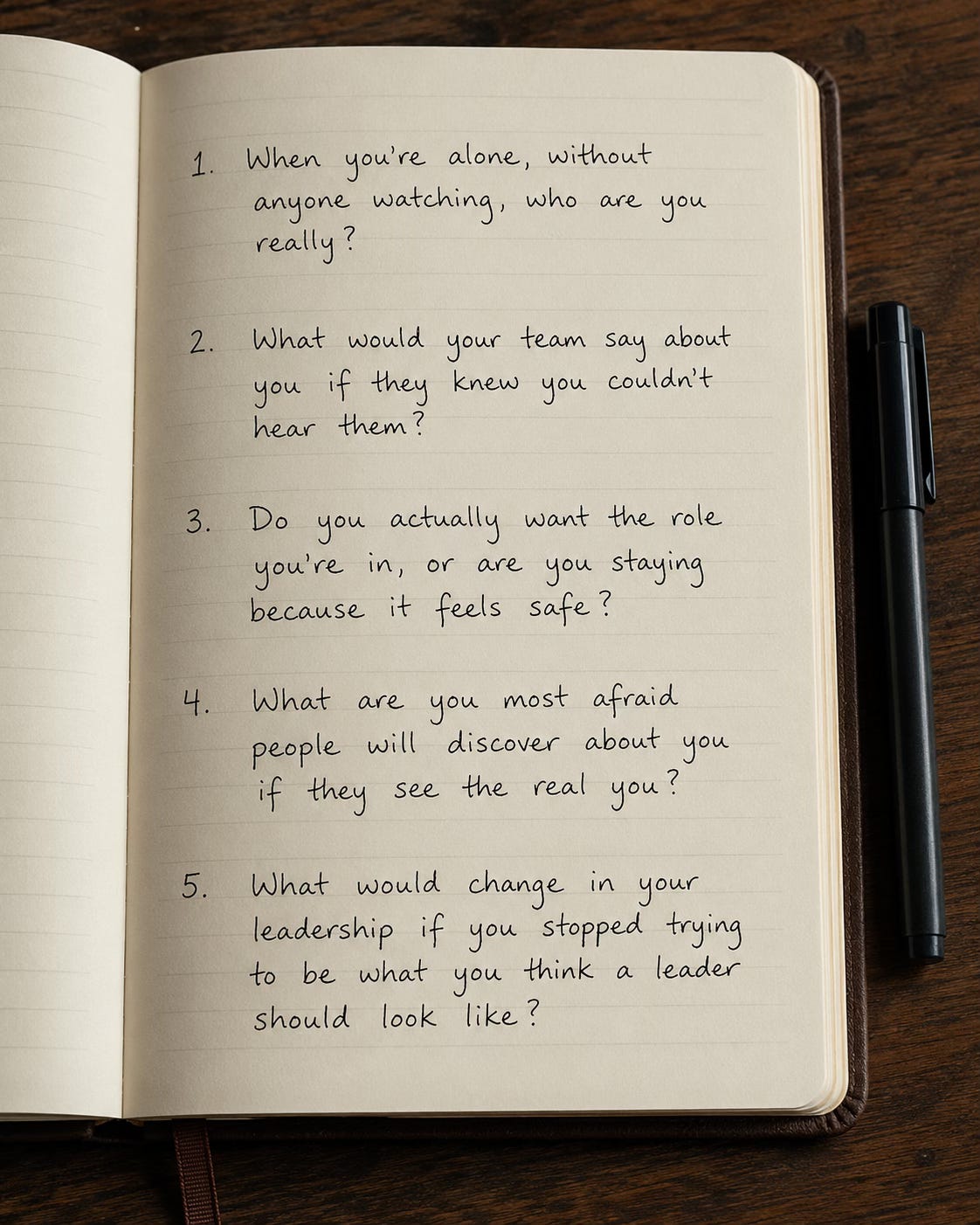
Get a notebook. Sit somewhere quiet. Write your honest answer to five questions, and don’t show anybody the answers.
1 - When you’re alone, without anyone watching, who are you really?
2 - What would your team say about you if they knew you couldn’t hear them?
3 - Do you actually want the role you’re in, or are you staying because it feels safe?
4 - What are you most afraid people will discover about you if they see the real you?
5 - What would change in your leadership if you stopped trying to be what you think a leader should look like?
Take a week with those. They’re not the kind of questions you answer in one sitting. They surface things, and the things they surface are the things you’ve probably been outrunning.
After you’ve done that work, the action gets simpler. Pick one small thing you usually fake, and stop faking it once this week with one person you trust. Notice the moments when you feel the mask going on, the little tightening, the little voice adjustment, the little posture shift. You don’t have to drop the mask in that moment. Just notice it happening. And when you mess up or don’t
know something, try saying this out loud. “I don’t have all the answers here, and I need your input.” Say that one sentence in one meeting this week and watch the room change.
Dropping the mask is the slowest, hardest, and most worthwhile work a leader does. It takes confidence. It takes discipline. It takes quiet. It takes the willingness to be seen, which is the one thing most leaders have spent their whole careers avoiding.
But the person underneath is the better leader. Always has been. Your team has been waiting to meet that person.
This week, give them a chance.